Author: sonneteer155

  • Thoughts Condensed

    Thoughts Condensed

    … used to write observational ditties.
    Sunrise anecdotes, as they rose to view.
    High-rise moments that could tickle and tease.
    Bric-a-brac messages from me to you.
    Kept them in a folder, tattered and torn:
    My Complete Book of Unfinished Works.
    A mixed anthology of statements, sworn
    to the master of truth; where danger lurks.
    It’s a people watcher’s compendium,
    an unbound collection of clever quips:
    “slivers of silver – soft as cerium.”
    “the tighter one grips – the faster one slips.”
    . Life is just a series of thoughts condensed,
    . cryptic adages, over days dispensed.

    © Tim Grace, 21 December 2014


    To the reader: Snapshots of life in passing are soon lost to memory. Short-term moments that catch your interest but quickly fade from view. These are the ingredients of doodles and ditties. My notebooks are full of sketchy lines and idle jots; half capturing a fleeting thought. And there’s the problem; at some point, do these bits and pieces make collective sense? Unlike entries in a diary or journal these snippets have a weak relationship with a string of time.

    To the poet: Side-by-side two poems will often reflect a shared relationship with the poet’s current experience. As often as not they might also reflect the poet’s quick shift of focus. Some poems make reference to past or recurring interests and therefore resemble poems written in a distant period. In poetry chronology and sequence are quite separate issues… two threads; one rope.


    Thoughts Condensed
    Thoughts Condensed
  • Rooms To Let

    Rooms To Let

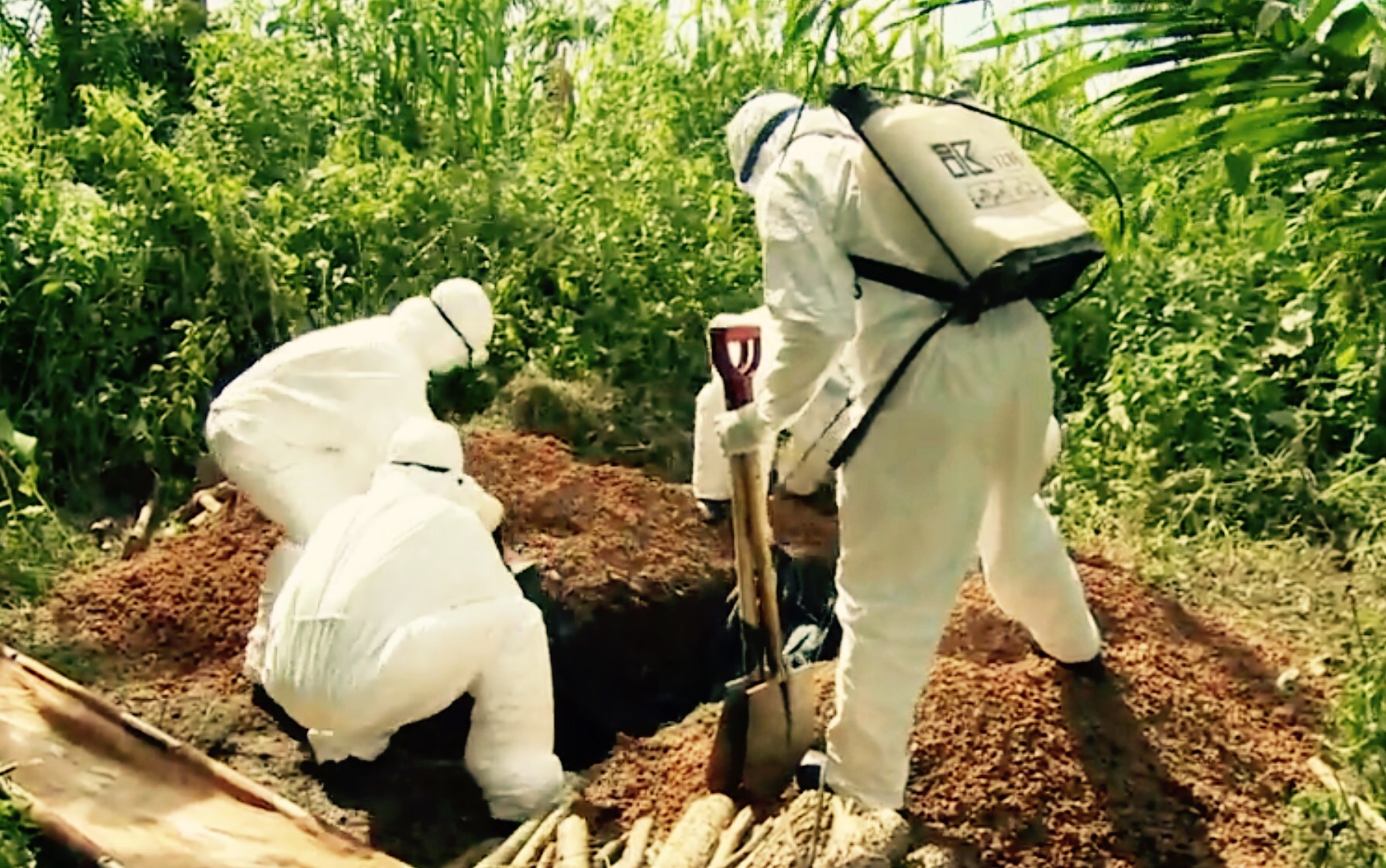
    Their grip on life was tenuous at best;
    they faced disease, disaster, distortions
    of human spirit. They’re laid to rest
    in shallow graves – in short-cut proportions.
    They were denied the surety of time,
    that through age would deliver them their dreams
    and wishes. They are the unfinished rhyme,
    left to hang – dangling threads and broken seams.
    Their length of stay and early departure
    leaves a host of unscheduled vacancies
    with ‘rooms to let’ but no room to barter
    any further bids or contingencies.
    . Their absence leaves an emptiness – a void;
    . despondency of destiny deployed.

    © Tim Grace, 21 December 2014


    To the reader: In 1976, the first case of Ebola (a viral-hemorrhagic disease of five known types) occurred in Yambuku, a small village of Zaire (now the Democratic Republic of Congo). To date the largest outbreak of Ebola occurred in 2014; affecting multiple countries throughout West Africa; infecting over 27,000 people and killing more than 11,000. Ebola is a primates’ disease spread by contact with infected carriers; a very effective and efficient killer that consumes the body with rapacious zeal.

    To the poet: The size of the 2014 Ebola outbreak took the world by surprise. Consequently, the death toll rose to epidemic proportions. Through the safe lens of a documentary I watched the healthy take care of the sick; and all too often attend to the dead with body bags and shallow graves. The ‘safe lens’ should not provide comfort, it should stir emotions, raise consciousness and press the poet’s pen to paper.

    Rooms To Let Rooms To Let
    Picture Source:
    (http://youtu.be/rlHLmsKEh8s)
  • Just a poet

    Just a poet

    Do not give that poet licence to print.
    Trust him with nothing more than a bent quill.
    Give him no room to manoeuvre, no hint
    of suggestion; no modicum of thrill;
    nothing to spill upon a naked page.
    Just for his own amusement, he’ll distort
    an innocent phrase; blatantly upstage
    the messenger with elevated haught.
    He’ll brazenly award himself credit
    beyond his due; without hesitation,
    he’ll tag himself as first to have said it…
    Man of Words … with big imagination.
    . This ‘Man of Words’ is just a dictionary,
    . just a parrot, well-skilled at mimicry.

    © Tim Grace, 23 November 2014


    To the reader: It’s not words that commit the crime; it’s the choice of those words in combination with intent to harm or damage reputation. And so, the shady area of exploitation is encircled by interpretation. The cunning ‘poet’ will cleverly disguise his ambiguous message with layers of obfuscated connotation. Using every trick in the book, he’ll burden the reader with responsibility for word association.

    To the poet: The parrot might be able to argue his words should not be taken literally. But, as a poet, you do have to take responsibility for the syntax and semantics of your artistic expression. Your deliberate acts of subtle word-play can cause a mischief that requires remediation; or at least, explanation. Blaming the reader for his/her sensitive interpretation is hardly the act of a chivalrous sonneteer.


    Just a Poet Just a Poet
    Picture Source:
    (http://youtu.be/IqRrvdJMvlk)
  • In His Likeness

    In His Likeness

    Made in his likeness. More true than correct.
    A permanent resemblance, confirming
    his rigidity. In every respect
    a replica; and in that sense, a thing
    to be admired. As would justify
    impressive compliment: so highly classed,
    so desirable to this maiden’s eye.
    Thus, besotted by his enduring cast,
    she would praise upon him commendation.
    Wonder at the depth of his conviction.
    Absorb his strength, ride his motivation;
    ’til resolved of Cupid’s contradiction.
    . Conviction is not a measure of length,
    . without substance we have no strength.

    © Tim Grace, 19 October 2014


    To the reader: Stature has less to do with shape and form; more to do with conviction and substance. While the proportion of a figure provides insight into its mechanical advantages, the nature of its pose and posture suggest its depth of character. Poise and style are features of an impressive presence; something to be admired.

    To the poet: Shakespeare enjoyed a little naughtiness. Sprinkled throughout his sonnets are references to all manner of subtle titillations. His last two sonnets (153 and 154) provide the most obvious examples of his brand of bawdiness. Never salacious or explicit just suggestive of something a little spicy. Could that be … surely not?


    In His Likeness In His Likeness
    Picture Source:
    (http://youtu.be/OOO1mffekkw)
  • Life’s Narrative

    Life’s Narrative

    Do we discover purpose, or is that
    a given; that through life, we must fulfil?
    To what extent are we determined, at
    what point do we grip that moment still?
    Is life just another conversation,
    a string of thoughts? Ruminated verbiage
    that connects two points upon occasion.
    A life-span, that builds a virtual bridge
    from here to eternity; quite a stretch.
    A void, can’t be leapt in a single bound;
    can’t be fathomed; a forward passing fetch,
    caught on the fly – wrestled and brought to ground.
    . Life’s narrative is given spin and span,
    . just enough to scuttle the ‘best of’ plan.

    © Tim Grace, 29 September 2014


    To the reader: The ‘universal givens’ are built into the fabric of our design. Therefore, our solutions to some extent conform to a pre-determined brief. Within bounds there’s plenty of room to be creative but as nature so regularly displays, there are some basic patterns that warrant repeat: the beautiful helix, the golden ratio and fibonacci’s spiral; to name a few.

    To the poet: Our purpose; a universal mystery, that asks: “Why are we here?”. Without certainty of purpose we have no option but to explore the potential of an uncertain existence. To chronicle that collective journey, the Arts provide an open ended narrative. Without apology, the Arts interpret uncertainty using imagination as its tool of choice. To search is our purpose… the mission is unclear.


    Life's Narrative
    Life’s Narrative
    Picture Source:
    (http://youtu.be/nI8A61uqybw)
  • Forensic Crop

    Forensic Crop

    There’s a field of sunflowers, fertilised
    with blood and bone that’s fallen from the sky.
    A forensic crop, to be scrutinised
    for every seed of truth; felled from on high.
    There’ll be a harvest of human debris,
    a reassembling of the scatterings.
    There’ll be an inquest into tragedy
    with assessment of its smatterings.
    And all of this… and all of this for what?
    A crime scene, rich with humanity’s loss.
    A battle field, a war zone; someone’s plot
    eternal, and ‘they’ couldn’t give a toss.
    . Scatterings – the source of recovery.
    . Smatterings – the course of discovery.

    © Tim Grace, 13 September 2014


    To the reader: Civilian passengers and crew, on MH17, were victims of a missile attack. Aircraft and human debris landed in a field of sunflowers in Ukrane’s disputed territory. Embattled circumstances surrounding the crime scene created a forensic nightmare. The inexplicable nature of the horrific attack was worsened by a lack of responsibility or remorse shown by those who perpetrated the crime.

    To the poet: Looking back on my draft, this sonnet was written in one session without much editing required. At the time of writing, there was a pervasive sense of frustration being expressed by nations seeking compassionate resolution. Without reserve, the sonnet depicts a wantonly wasteful tragedy… highlights the futility of war.


    Forensic Crop Forensic Crop
    Picture Source:
    (http://youtu.be/dYfGcnTtQbE)